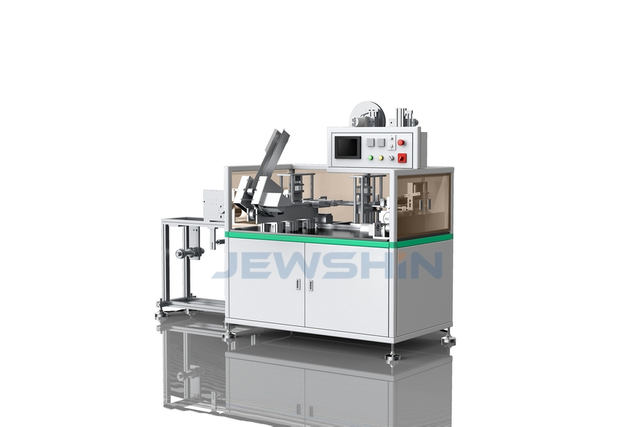
For a small business packing 500–5,000 units per shift, compact automation can reduce repetitive handling, stabilize fill weights, improve seal consistency, and raise output without installing a full production line. A manual station running at 5–8 packs per minute produces roughly 300–480 packs per hour before breaks, replenishment, cleaning, and rework. A compact machine rated at 20–40 packs per minute has a theoretical range of 1,200–2,400 packs per hour, although real output should be calculated from product trials. The purchase makes the most sense when labor hours, packaging waste, overfill, rejected packs, and missed production capacity cost more over 2–4 years than the installed equipment.
Small companies often reach automation through arithmetic rather than factory size. Two operators spending 6 hours a day on weighing, filling, sealing, counting, and boxing consume 12 labor-hours per shift; over 250 working days in 2026, that is 3,000 labor-hours. If equipment reduces direct attendance to 4 hours per shift, 2,000 hours become available for production preparation, inspection, warehousing, or order fulfillment.
That labor comparison becomes more useful when output is measured at the same time. At 7 finished packs per minute, a manual station theoretically completes 420 per hour, but an 85% operating rate lowers usable production to about 357. A machine sustaining 25 packs per minute at the same 85% rate produces about 1,275 per hour, so the relevant number is saleable packs after stops and rejects rather than the speed printed on a brochure.
A machine advertised at 40 packs per minute does not produce 19,200 good packs during an 8-hour shift if film changes, cleaning, product refilling, adjustments, and inspection consume 20% of scheduled time.
Output alone still gives an incomplete cost picture because filling accuracy affects material consumption every time a package leaves the line. A 250 g product overfilled by only 3% contains 7.5 g of unpaid product. Across 100,000 packs, the extra quantity reaches 750 kg. At €8 per kg of manufactured product cost, that represents €6,000 tied to overfill before packaging film, labor, freight, or retailer deductions are considered.
Automated dosing can narrow variation when the filling technology matches the material. Auger fillers are commonly used for powders, volumetric systems suit repeatable free-flowing products, multihead weighers are used for discrete foods, and piston or pump fillers handle many liquids and pastes. A buyer should test at least 100–500 consecutive packages from the intended product and calculate average weight, minimum and maximum readings, standard deviation, rejects, and overfill percentage.
Fill control leads directly to sealing because a correctly measured package still becomes scrap when the seal fails. Temperature, dwell time, pressure, film structure, contamination in the seal area, and jaw alignment can change seal performance. If a plant produces 2,000 packs per day with a 2% sealing-reject rate, 40 packs require disposal or rework; across 250 production days, the annual total reaches 10,000 packs.
Film waste deserves the same measurement. Suppose each finished pouch consumes €0.06 of film and setup or process faults waste 3% of 500,000 annual packs. About 15,000 package equivalents are lost, or €900 in film alone. Add product trapped inside rejected packs and employee time spent sorting them, and a small percentage can become a noticeable annual expense.
| Operating measure | Manual / poorly controlled process | Automation target to verify |
|---|---|---|
| Output | 5–8 packs/min | 20–40 packs/min machine-dependent |
| Scheduled operating time | 8 hours | 8 hours |
| Example usable time | 75–85% | 80–90% after stable setup |
| Example reject rate | 2–4% | Verify below 1–2% in trials |
| Weight sample | Often periodic | Test 100–500 consecutive packs |
| Annual production example | 100,000 units | 250,000+ units if demand exists |
The percentages in the table are evaluation ranges rather than universal machine guarantees. Product behavior can change them substantially. A dry 5 mm pellet flows differently from flour, a fragile snack cannot tolerate the same handling as metal fasteners, and a viscous cosmetic cream may require heated or specialized filling equipment. In 2026, buyers should therefore ask suppliers to run the real product, real packaging material, and several intended pack sizes before accepting throughput claims.
Package format creates another practical constraint. A machine that runs one 100 g pouch efficiently may require different forming collars, sealing jaws, dosing parts, guides, or software settings for a 500 g format. If a business runs 8 SKUs and loses 30 minutes at every changeover, one full cycle through the range consumes 4 production hours before normal packaging resumes.
For businesses selling several SKUs, changeover time can matter more than maximum speed. Reducing eight 30-minute changes to 15 minutes saves 2 hours per cycle, a 50% reduction. Over 100 multi-SKU production cycles per year, that returns 200 hours of machine availability without increasing the nominal packs-per-minute rating.
Floor space can produce a similar effect on total ownership cost. Small workshops may not have room for separate filling, sealing, labeling, conveying, inspection, and case-packing stations. A compact system occupying 2–4 m² instead of a multi-machine arrangement requiring 10 m² can release 6–8 m² for ingredients, finished stock, or another production process; the financial importance depends on local commercial rent and utility costs in 2026.
Limited space also changes how secondary packaging should be selected. A manufacturer may automate pouch or bottle production first and add cartoning machines when retail cartons become a regular requirement. If 60% of output still ships in simple cases while only 40% requires individual cartons, buying equipment around the actual product mix can avoid paying for capacity that remains unused for much of the week.
Small manufacturers should compare equipment at the expected daily volume, not at the supplier's maximum speed. A 60-pack-per-minute machine operating only 90 minutes per day may provide less financial benefit than a smaller unit with faster cleaning and 50% shorter changeovers.
Utilities add another layer to the calculation. Buyers should record electrical load, voltage, compressed-air pressure and consumption, extraction requirements, heating demand, and warm-up time. A machine using 3 kW for 6 production hours consumes 18 kWh per day; across 250 days, annual consumption is about 4,500 kWh before compressors or upstream feeders are included.
Maintenance should then be priced alongside electricity rather than treated as an occasional surprise. Heating elements, thermocouples, belts, blades, suction cups, sensors, bearings, pneumatic seals, and printer consumables are normal service items on many packaging systems. If planned maintenance requires 2% of scheduled production time, an 8-hour shift effectively loses about 9.6 minutes before unplanned stops are counted.
Spare-part availability matters more for a company operating one machine than for a plant with several lines. A five-day stoppage at 2,000 packs per day delays 10,000 units. Keeping €500–€1,500 of frequently replaced components on site can therefore be reasonable when a failed €50 sensor would otherwise wait several business days for international delivery.
Operator training affects those downtime numbers. Automation does not remove people from packaging; it changes their work from repetitive handling to setup, replenishment, inspection, cleaning, and basic troubleshooting. Training two or three employees rather than one provides coverage for holidays and sickness. If only one employee understands a machine that supplies 80% of packaged output, staffing becomes a production limitation even when the equipment itself is available.
Cleaning has similar importance for food, cosmetics, supplements, and other products with contact surfaces. A filler that takes 45 minutes to dismantle, wash, dry, inspect, and rebuild loses 9.4% of an 8-hour shift before production starts again. Reducing verified cleaning time to 25 minutes saves 20 minutes per change; across 200 cleaning cycles, that returns about 67 production hours per year.
The machine's construction should support the required hygiene level rather than merely look easy to clean. Buyers can inspect whether product-contact parts are accessible, whether residue collects around fasteners or corners, and whether parts can be removed without extensive tools. For food applications in Europe or North America, materials, guarding, electrical design, documentation, and applicable food-contact requirements should be reviewed before the 2026 purchase order is signed.
Safety deserves the same pre-purchase review. Automatic cutters, heated sealing jaws, conveyors, rotating shafts, pneumatic cylinders, and moving doors can create mechanical or thermal hazards. Guards, interlocks, emergency stops, electrical protection, lockout procedures, and operator instructions should match the installation. Saving 10% on purchase price is difficult to justify if the cheaper configuration requires later guarding, electrical modifications, or compliance work.
Capital cost can then be compared with measurable annual effects. Consider a complete installation costing €24,000. If annual labor capacity released is valued internally at €7,500, reduced overfill saves €3,000, scrap reduction saves €1,200, and maintenance plus additional utilities cost €1,700, the annual net operating improvement is about €10,000. Simple payback is approximately 2.4 years, excluding financing, tax treatment, and extra contribution from higher sales.
That calculation should also be tested at lower production. If actual orders fall 30%, savings related to volume will fall as well, potentially extending a 2.4-year payback beyond 3 years. A spreadsheet with 70%, 100%, and 130% volume scenarios gives a small company a more useful purchasing view than a single optimistic forecast.
Financing can materially change the monthly comparison. A €24,000 purchase spread across several years creates a different cash requirement from paying the full amount at installation, while leasing may include conditions on ownership, service, or early termination. Companies should compare total payments through the full term, not only the monthly figure, and include commissioning, tooling, freight, training, taxes, and 1–2 years of expected spare parts.
Capacity should also be linked to confirmed or reasonably forecast demand. Increasing packaging capacity from 500 to 1,500 units per hour has little commercial benefit when orders remain at 400 units per day. At 3,000 daily orders, however, a manual process completing 350 good packs per hour needs about 8.6 packaging hours, while a machine producing 1,200 good packs per hour needs roughly 2.5 machine-hours.
Capacity has financial use only when the business can sell the additional production or use the released labor elsewhere. Equipment utilization of 20% and utilization of 70% can produce very different payback periods even when both machines run at exactly the same rated speed.
Quality records can improve alongside capacity. Automatic systems with counters, recipe storage, batch settings, alarms, and production totals can provide more repeatable operating information than handwritten records. A company producing 50 batches per month can compare reject percentage, average fill weight, downtime, and packs per hour across 600 annual batches, making gradual process changes easier to measure.
Retail presentation may improve at the same time because bag length, seal position, fill quantity, carton closure, and printed batch information become more repeatable. If a retailer rejects only 0.5% of a 200,000-unit annual supply because of packaging faults, 1,000 units still require replacement, credit, sorting, or disposal. Preventing small defect percentages therefore matters well before a company reaches industrial-scale volume.
A purchase review should finish with a real production acceptance test. Run at least 500–1,000 packages where practical, record good units rather than total cycles, measure 100 or more fill weights, count film and product rejects, time one complete changeover, and perform a normal cleaning procedure. A machine producing 1,000 cycles with 25 rejects has a 2.5% observed reject rate; the same test with five rejects records 0.5%.
A compact automatic packaging machine is financially suitable when measured labor, product giveaway, scrap, downtime, floor-space use, and required capacity support the purchase at realistic production rates. For a small business running 250 days per year, differences of 1–3% in waste or several hundred labor-hours can materially alter ownership cost, so supplier demonstrations should be converted into operating numbers before equipment is ordered.