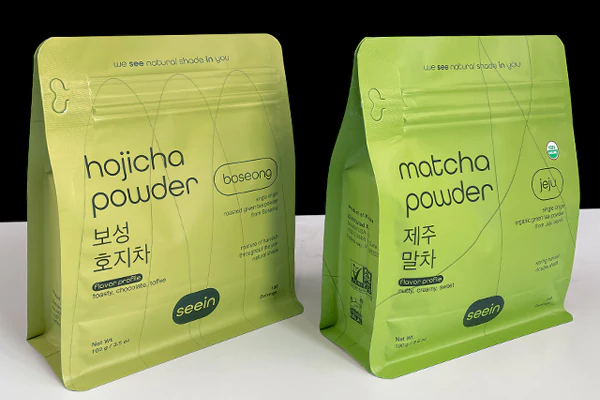
Personalized coffee packaging improves presentation by making the bag match the coffee’s price, roast style, origin, format, and expected shelf life. A 2001 shelf-life study found that increasing oxygen partial pressure from 0.5 to 21.3 kPa accelerated roasted coffee deterioration about 20 times, while a 10°C storage-temperature increase raised deterioration by roughly 15–23%. Packaging therefore has to do more than display artwork. Material barriers, valve selection, resealability, pack size, typography, variable printing, and disposal information all affect how buyers judge the product and how well the coffee performs after purchase.
A personalized coffee bag starts with the product rather than the artwork. Whole beans, ground coffee, espresso blends, single-origin releases, and subscription products do not have identical packaging requirements. Ground coffee has much more exposed surface area after grinding, so oxygen control becomes particularly important; a review published by the Specialty Coffee Association cites research in which nitrogen-flushed coffee reached about 6 months of sensory shelf life, compared with roughly 3 months for coffee packed without gas flushing. Once preservation requirements are set, graphic choices can be made without asking the bag to compensate for weak technical specifications.
That technical foundation changes what customers see on the shelf. A bag carrying the coffee name, producing region, roast level, process, tasting notes, net weight, and roast date has limited space, so personalized layouts can give the most useful information more area instead of forcing every SKU into one generic template. A light-roasted Ethiopian coffee can place floral and citrus notes near the product name, while an espresso blend can give more visual space to roast profile and brewing use; the brand system stays recognizable, but the buying information changes with the product.
Presentation works better when a customer can understand the coffee in a few seconds without turning the package over several times.
Size also affects perceived presentation. A 250 g specialty bag filled into packaging developed for 1 kg can look poorly proportioned, while a pouch specified around its actual fill volume keeps the front panel flatter and gives graphics a more controlled position. Stable flat-bottom formats can offer five printable panels, while stand-up pouches provide a broad front face with less material than many rigid formats. Personalized dimensions also reduce excess headspace, although coffee degassing requirements must still be considered before reducing internal volume.
Degassing is especially relevant for freshly roasted whole beans because carbon dioxide continues to leave the coffee after roasting. A 2025 study tested 100 g portions of moderately dark roasted beans in metallized bags fitted with pressure-release valves at 15°C, 25°C, 35°C, and 45°C; higher temperatures increased and accelerated CO2 production. A one-way valve can therefore be part of the visual and technical specification rather than an accessory added after artwork approval. Its location can be planned around labels, printed panels, and sealing areas so the finished bag looks intentional.
Barrier construction deserves the same attention. Oxygen, moisture, light, sealing quality, storage temperature, and initial headspace conditions affect how quickly roasted coffee changes. In the 2001 shelf-life work, raising water activity by 0.1 increased deterioration by about 60%, showing why moisture protection cannot be treated as secondary to oxygen control. A personalized pack can select barrier performance for the expected distribution period instead of automatically using the same laminate for a local 30-day release and a product expected to remain in distribution for several months.
| Packaging element | Presentation role | Technical question to specify |
|---|---|---|
| One-way valve | Signals freshly roasted whole-bean positioning | How much CO2 must be released without allowing significant air entry? |
| Resealable zipper | Keeps the opening neat after first use | Will the seal remain reliable through repeated opening? |
| High-barrier layer | Allows a slim flexible pack without sacrificing protection | What OTR and WVTR are required at stated test conditions? |
| Matte or gloss finish | Changes surface reflection and print appearance | Does the finish tolerate filling, shipping, and rubbing? |
| Variable print area | Separates origins, lots, or seasonal releases | How frequently will SKU information change? |
| QR code | Moves detailed information off the main panel | Is the code large and contrasted enough for reliable scanning? |
Preservation performance also supports cleaner front-panel design. When technical details are planned early, the visible package does not need to rely on vague freshness language. Research summarized by the Specialty Coffee Association reported that vacuum-packed coffee had a staling rate about five times lower than beans packed in air in one study, while another reported 0% residual oxygen after two rounds of vacuum packing and gas flushing. Brands can then use precise information such as roast date, valve-equipped packaging, storage advice, or batch identification rather than filling the panel with broad claims.
Personalization becomes more useful when a roaster carries many coffees. The logo, type family, bag structure, and information positions can remain fixed, while one or two controlled elements distinguish products. A roaster with 12 origins, for example, could reserve one panel for farm and process details and change a single graphic field by origin; a 4-product espresso range could retain the same architecture while varying roast information and brewing recommendations. Fewer layout changes reduce inconsistency between SKUs and make a product family easier to recognize online and in physical retail.
Short-run digital printing expands that approach because not every design requires a large permanent inventory of preprinted bags. Seasonal coffees, small farm lots, collaborations, event packs, and subscription releases can use batch-specific graphics or labels without changing the whole brand system. Variable printing can also place lot numbers, roast dates, QR codes, or regional product information in defined fields. For a coffee sold for only 8–12 weeks, that flexibility can prevent a short release from being presented in a generic stock pouch designed for year-round products.
A small production run still needs the same information hierarchy as a permanent product; only the amount of packaging inventory should change.
Material choice introduces another presentation question: environmental wording has to match recognized disposal conditions. The European EN 13432 framework requires certified industrially compostable packaging to reach at least 90% biodegradation within 6 months and to disintegrate during a 12-week composting test; ASTM D6400 is intended for plastics designed for municipal or industrial aerobic composting facilities rather than ordinary uncontrolled disposal. A coffee brand using sustainable compostable bags should therefore specify the applicable certification and disposal route instead of printing an undefined “eco” statement.
Compostability also cannot replace barrier testing. Coffee still needs protection from oxygen and water vapor, so a material should be evaluated as a complete printed and sealed package rather than judged only by its base film. In a published compostable-barrier study, two coated structures reached 92.9% and 93.0% biodegradation after 91 days under the reported test conditions, exceeding the 90% criterion used by EN 13432. Barrier coating, inks, adhesives, zipper components, and valves need compatible specifications when a brand intends to make a certification-based claim about the finished package.
Online presentation adds another constraint. A physical bag may be viewed from 40–60 cm away in a store, while an e-commerce shopper may first see it as a thumbnail only a few centimeters wide on a phone screen. Fine origin text and subtle foil details can disappear at that scale, so personalized packs benefit from a large product name, strong logo placement, simple roast identification, and one recognizable visual field. Secondary details can stay on side or back panels and appear in additional product-page images.
The physical experience should continue that hierarchy after delivery. A zipper that opens cleanly, a stable base, a tear notch positioned above the reseal, and a valve that does not interfere with pouring all affect how finished the package feels after the first opening. Secondary shelf life becomes relevant at this stage because exposure increases once consumers repeatedly open the bag; the Specialty Coffee Association’s literature review specifically notes that post-opening storage can proceed differently from unopened-package aging. For a 340 g bag used over 10–20 brewing sessions, reseal performance can matter far more than a decorative finish visible only before opening.
Printed information can also reduce customer questions. Instead of placing five vague tasting descriptors on the front, a personalized back panel can state origin, processing method, roast level, recommended dose range, brewing format, storage guidance, and roast date in a fixed reading order. A QR code can carry farm information, preparation videos, or current lot details when the physical panel becomes crowded. For limited lots that change every 2–3 months, updating the linked product page is easier than redesigning permanent brand information each time.
Manufacturing tolerance should be considered before artwork is finalized. Sealing zones, zipper tracks, valve holes, tear notches, gusset folds, registration movement, and barcode quiet zones reduce the area that can safely carry important text. A design may look balanced in a flat PDF but shift once a 3-dimensional pouch is filled and the side gussets open. Placing small type several millimeters away from folds and seals gives production variation more room, while prototypes filled with the intended coffee show whether the front panel remains readable at real shelf depth.
The most effective personalized package is therefore specified as a physical system: coffee format, target shelf life, fill weight, headspace, gas treatment, valve, barrier level, closure, dimensions, printing method, regulatory text, disposal route, and graphics are considered together. A 12-month ground-coffee product and a rotating 250 g whole-bean release should not receive identical structures merely because both belong to the same brand. Presentation improves when the package visibly fits the coffee while the less visible material and sealing specifications protect what customers are paying for.