Soap-Based or Amino Acid Cleanser: A Brand Decision Guide
A men's cleanser brief works best when it describes the routine before it names a formula. Six decisions—user, cleansing type, texture, dose, package and rinse target—give the laboratory a testable starting point and keep the first samples from drifting into unrelated concepts.
Key takeaways
- Specify the target routine and setting before selecting a cleansing direction.
- Choose type and texture as separate attributes in the brief.
- Set a measurable dose and rinse method for the panel.
- Freeze the formula and pack version in the production handoff.
Who is the product for and where is it used?
Describe the target routine: quick morning wash, post-training shower, travel kit or a slower evening cleanse. The setting affects dose, package handling and how much time the user will spend rinsing.
Avoid relying on demographic labels alone. Ask what the user values—fast rinse, rich foam, low residue or compact packing—and use those priorities to rank formulation decisions.
Which cleansing type should the brief name?
Yunmei lists Soap-Based, Amino Acid, Compound and Exfoliating Facial Cleanser. Ask the formulator to explain which direction best fits the intended wash experience and what trade-offs that choice creates for foam, rinse and after-feel.
A men's facial cleanser product must be evaluated as a finished formula, not by category shorthand. Test it at the intended dose, then document the user observation that supports the decision.
| Dimension | Published options | Buyer decision |
|---|---|---|
| Cleansing type | Soap-Based / Amino Acid / Compound / Exfoliating | Cleansing direction |
| Texture | Cream / Creamy / Gel / Foamy / Powdered | Handling and delivery |
What texture and delivery format fit the routine?
The published texture options are Cream, Creamy, Gel, Foamy and Powdered. Match texture with how the product is dispensed and transported. A powder's water activation differs from a pump foam, even if both are marketed for the same routine.
The package sets portion size and wet-hand usability. A test in a beaker cannot show whether a cap opens easily in a shower or whether a pump remains consistent after repeated use.
How is the rinse target made measurable?
Choose a fixed dose, massage time and water temperature. Define what counts as clear rinse and when the user records residue or tightness. Each tester should follow the same sequence so the samples can be compared fairly.
Separate immediate rinse effort from later feel. A formula can rinse quickly yet leave an after-feel the target user dislikes; one combined rating hides the reason.
What should the first sample round change?
Keep the first round narrow. Compare two cleansing directions at similar texture and fragrance, or compare two textures within one direction. Changing every variable at once produces an interesting meeting but little development knowledge.
Ask the laboratory to label versions and state what changed. Return comments as observations—dose, foam onset, rinse and delayed feel—rather than general requests for a 'cleaner' result.
When does packaging compatibility begin?
Start when a package direction is known, not after formula approval. Check output, closure, leakage and storage with the intended component. Yunmei identifies packaging lead time as a schedule influence, so early selection can protect the project calendar.
Yunmei publishes a three-to-six-month window for stability and compatibility reports. Confirm what package and formula revision those reports cover before treating them as final evidence.
How should the final brief travel to production?
Freeze cleansing type, texture, formula code, pack, dose and rinse profile in one controlled specification. Identify who can approve a change and which checks repeat when a component or formula moves.
The product page gives a vocabulary buyers can use, but the production record needs exact approved references. A clear handoff helps the next batch match the experience that passed the panel.
Translate the routine into six sample decisions
Suppose a tester uses 1.2 g per wash and the brand expects 5,000 uses from a launch batch. The theoretical fill needed is 1.2 g × 5,000 = 6,000 g, or 6 kg, before sampling, filling loss and reserve. This calculation connects dose testing to the commercial quantity model.
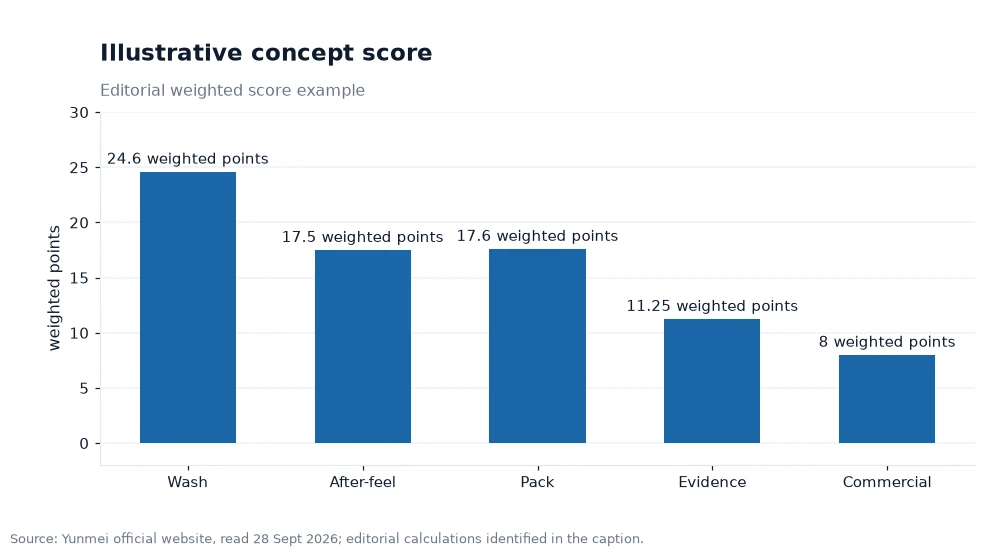
The menu gives buyers a vocabulary for the brief. The best combination still depends on the user's routine, the sample evidence and the selected pack.
Frequently asked questions
What six decisions should a cleanser brief include?
Name the user routine, cleansing type, texture, dose, package and rinse target. These choices make the first sample round focused and testable.
Can the product page determine which type is right?
It provides the published option names. The brand and formulator still need to select and test a finished formula against the intended routine.
Why record dose during a wash test?
Dose affects foam, rinse, cost per use and the number of uses in a pack. A fixed amount makes sample comparisons more meaningful.
Approve the wash, not only the jar
A cleanser earns approval at the sink. Use a repeatable routine, document both immediate and delayed feel, and make the controlled result part of the production reference. If a concept scores well but misses a mandatory criterion, document the exception and the decision owner. Do not quietly average the failure into a total. The brand can decide to revise the product brief, run another sample or stop that direction, but each choice should be visible. Compare the second round to the original target rather than moving the target to fit the newest prototype. Keep the score sheet, sample code and lab feedback together. When the chosen cleanser moves toward production, carry its dose, package and rinse method into the quality reference so later checks test the same product experience that the panel approved. Before the project is closed, compare the approved record with the exact item being purchased. Check the version, quantity, component and evidence reference rather than relying on a remembered conversation. Ask the supplier to confirm any open assumption in writing, and save that confirmation with the quotation. If an answer changes the brief, update the sample and calendar before releasing the next commitment. This final reconciliation gives the brand a clear basis for later questions from production, quality or customer service. It also makes the next order easier to plan because the team can distinguish what was learned from what was merely assumed during the first launch. A product team should also consider the cost of changing direction after packaging and artwork are committed. Keep an early concept gate before custom components are purchased, and a later confirmation gate before a large fill. If the cleansing system or texture changes between gates, identify which claims, instructions and compatibility checks need review. This does not require a large bureaucracy; a one-page change record can capture the issue, the decision and the next evidence needed. Give the decision to someone who can balance technical and commercial consequences. Teams that document the reason for a change are less likely to repeat it in later development and can explain why a former sample is no longer the correct reference. Review Yunmei’s OEM/ODM manufacturing overview and use the same written brief for every sample round.
Yunmei's published cleanser categories and route windows were read on 28 Sept 2026. Weighted scores in the example are calculations, not factory measurements.[1].